


Alligator has a mild taste often compared with chicken; the cut and cooking method change its chew. Tail and jaw are tender cuts, while other parts need more prep. Horney Toad Meats' alligator jerky adds sweet, savory flavor and low Cajun heat. It won't taste like plain cooked gator.
Key Takeaways
- Alligator's mild flavor makes chicken a useful comparison, not an exact match.
- The cut matters: tail and jaw differ from body and leg meat.
- Jerky's seasoning and chew change the eating experience.
- Read the full ingredient list before choosing a bag.
Alligator taste and texture
Alligator's tail and jaw are very tender cuts, while body and leg meat need more prep. The Louisiana Department of Wildlife and Fisheries describes its flavor as very mild. Its guide says alligator can replace chicken, veal, and most seafood in recipes.
The cut matters when one person calls gator tender and someone else recalls a much firmer bite. They may have eaten different cuts, cooked in different ways.
For a first cooked alligator dish, ask which cut you're buying. Tail or jaw is a clearer starting point than a bag marked only as alligator meat. Louisiana's guide also says to remove tough tendons and slice across the grain for a more tender bite.
The grain is the way the meat's fibers run. Cutting across those fibers makes them shorter, which changes how much chewing each piece needs. That's one thing a cook can check before blaming a new meat for a tough meal.
Alligator doesn't have to be fried. In a Nicholls State University interview, chef Nathan Richard makes that point about cooking gator.
Alligator vs chicken and fish
Chicken is a useful match for alligator's mild flavor. Seafood is another cooking reference, not a promise of fishy taste. Louisiana's guide lists both among the foods gator can replace in recipes.
Those are starting points. They don't mean a gator dish will taste just like chicken breast, shrimp, or a fish fillet. The cut, sauce, and cooking method still matter. A breaded bite and a piece cooked in sauce aren't a fair test of the meat alone.
For a clearer first taste, try gator without a heavy dipping sauce on the first bite. Then add the sauce you like. You'll get to taste the meat before the sauce, without having to eat a whole serving plain.
If chicken is your main reference, think mild flavor rather than the same texture. Horney Toad Meats describes the meat as close to chicken but firmer. That doesn't mean every gator cut or dish has the same chew.
If you don't like strongly flavored meat, the mild taste may appeal to you. Still, no food comparison can promise that you'll like it. Start with a small portion, especially when both the meat and the dish are new to you.
What alligator jerky tastes like
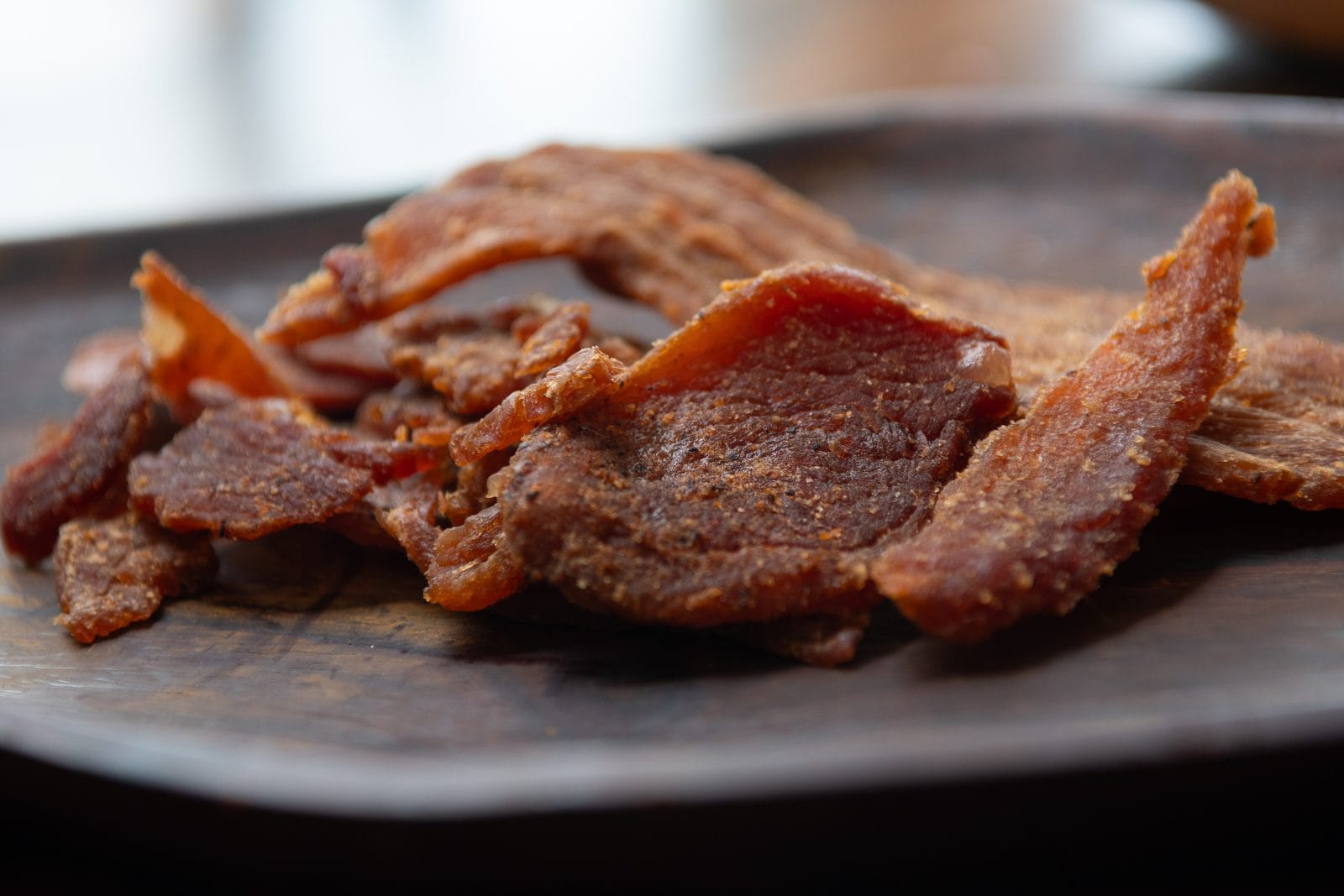
Horney Toad Meats' Alligator Jerky is mild, savory, and a little sweet, with low Cajun heat. The shop describes a softer chew than most beef jerky. That's what to expect from this bag, not a rule for all gator jerky.
The alligator comes from Louisiana. Brown sugar and teriyaki sauce give the seasoning its savory-sweet base. The ingredient list also names wine, onion, garlic, lemon juice, vinegar, and spices. Expect those ingredients to shape the flavor alongside the meat.
Take a small bite before pairing it with a strongly flavored snack. Notice the sweet taste, then the spices and chew. Try a drink of water between bites if you want to taste it next to a beef jerky flavor.
This bag's heat is low, with a Cajun character. Cajun describes the seasoning here, not a fixed heat level for every food with that name.
The listed bag size is 2 oz. For a first try, that gives you a small bag to share or taste on your own. Keep the bag so its ingredient list and storage directions stay with the jerky once it's open.
Is alligator meat healthy
The word “alligator” alone isn't enough to judge a food or decide whether it fits your needs. A plain cut and a bag of seasoned jerky aren't the same food. Read the bag's label rather than using the meat's name to decide what you should eat.
The U.S. Food and Drug Administration says people with food allergies should read the full ingredient list. Not every food has a “Contains” line, so don't rely on that line alone.
For this jerky, the listed teriyaki sauce contains soybeans and wheat. Check the bag before eating, and ask about anything unclear if you avoid an ingredient. Even a snack made from a new meat may have sauces or spices you know well.
FAQ
Does alligator really taste like chicken?
Chicken is a useful comparison because alligator has a mild flavor, but the two aren't the same. Louisiana's guide also lists veal and seafood as foods it can replace in recipes. For a first taste, check the cut and seasoning rather than expecting an exact copy of chicken.
Is alligator meat fishy?
A strong fishy flavor isn't how Louisiana's guide describes alligator; it calls the taste very mild. The guide says gator can replace seafood in recipes, not that it tastes like fish. The sauce or jerky seasoning will also shape what you taste.
Is alligator jerky tough?
Alligator jerky doesn't have to be tough. Horney Toad Meats describes its version as having a softer chew than most beef jerky. That doesn't mean every brand or recipe has the same texture. Read the bag's details, especially if a firm chew is what you want to avoid.
Is alligator jerky spicy?
Horney Toad Meats describes its alligator jerky as low heat with a Cajun character. Brown sugar and teriyaki sauce give it a sweet and savory base. Other recipes can differ, so check the bag rather than using “Cajun” to judge the heat on its own.
For a first taste, choose alligator for its mild flavor and check the seasoning before buying. Browse the exotic jerky range to compare alligator with the shop's Mako shark, bison, and elk options.
