


Plan on about 1 pound of raw bone-in prime rib per person, or 1/2 to 3/4 pound boneless. Choose the upper end for larger appetites or planned leftovers. Horney Toad Meats offers both cuts for pickup in Fallon, so decide which you want before working out the roast's weight.
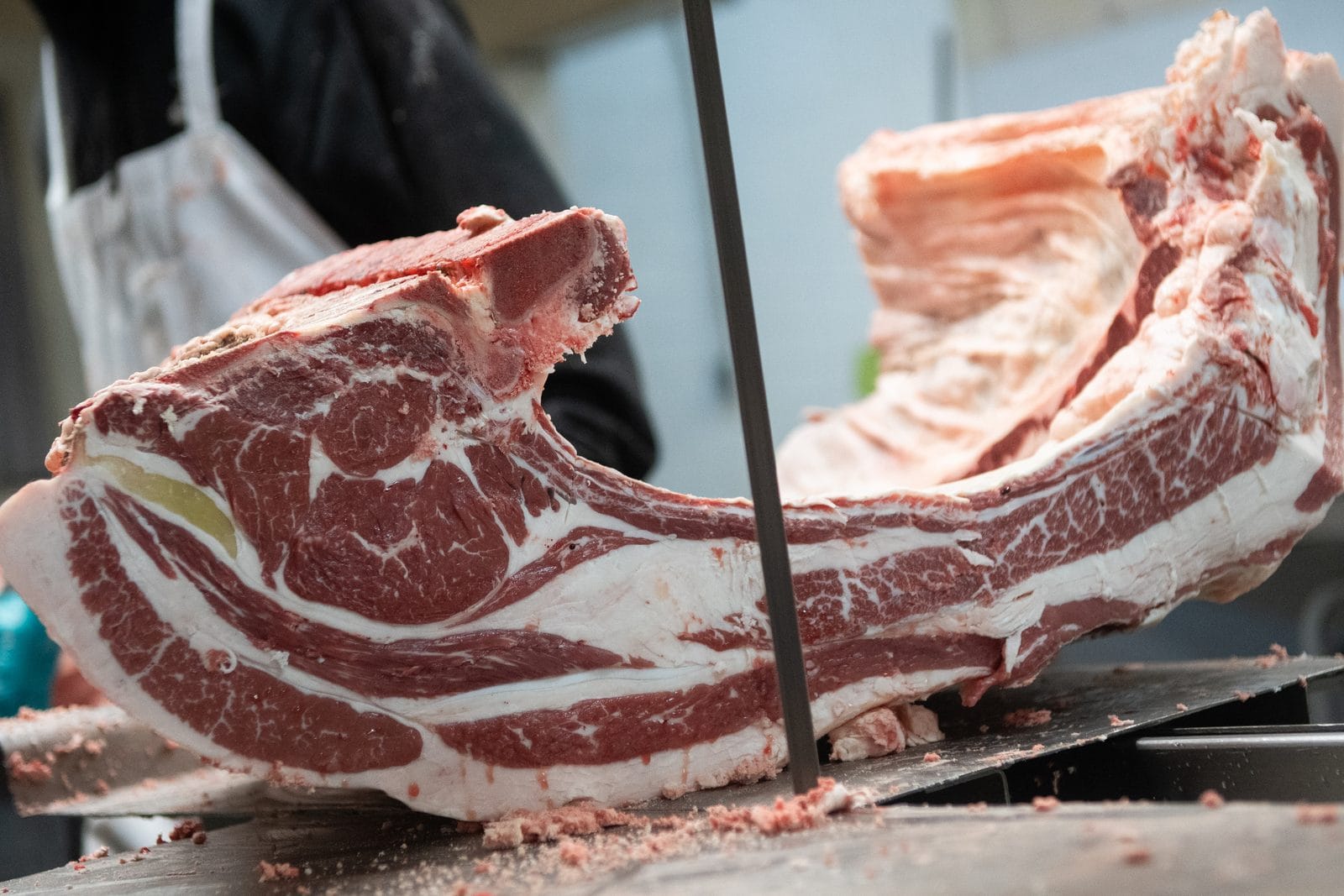
Key Takeaways
- Buy by raw weight: about 1 pound per person bone-in, or 1/2 to 3/4 pound boneless.
- Match cooking estimates to the cut, weight, and oven temperature.
- Use a thermometer, not minutes per pound alone, to decide when the roast is ready.
- USDA's minimum for beef roasts is 145°F before removal, followed by at least a 3-minute rest.
Portions per person (bone-in and boneless)
Bone-in prime rib needs a larger purchase weight because some of that weight is bone. Boneless prime rib gives you more meat for the same raw weight. Neither estimate describes the weight of a cooked slice.
University of Wyoming Extension gives a general rule of 1 pound per guest for bone-in prime rib. For boneless, it recommends 1/2 to 3/4 pound per person. It also notes that one rib serves about two adults when buying by the rib.
Use those amounts to work out an order before choosing a size. The table below multiplies the raw-weight estimates by the number of guests. It does not include an extra allowance for leftovers.
| GUESTS | BONE-IN PRIME RIB, RAW | BONELESS PRIME RIB, RAW |
|---|---|---|
| 4 | About 4 pounds | 2–3 pounds |
| 6 | About 6 pounds | 3–4.5 pounds |
| 8 | About 8 pounds | 4–6 pounds |
| 10 | About 10 pounds | 5–7.5 pounds |
| 12 | About 12 pounds | 6–9 pounds |
For example, eight guests call for about 8 pounds bone-in or 4–6 pounds boneless. Pick the upper end of the boneless range when prime rib is the main event. The lower end makes more sense alongside another main dish.
Count only the guests who will eat beef before multiplying. Then decide whether you want enough for sandwiches the next day.
For planned leftovers, add the number of extra portions you want using the same raw-weight guide. Two extra portions add about 2 pounds bone-in or 1–1.5 pounds boneless. That is easier to order than asking for an undefined “large roast.”
Bone count is a useful cross-check, not a replacement for weight. Ask for the roast's actual weight and whether the quoted size includes bones. A weight range on a product listing is not an exact weight for every roast.
Cooking time per pound
At 325°F, a 4–6-pound bone-in rib roast takes an estimated 23–25 minutes per pound. A boneless rib roast in the same weight range takes an estimated 28–33 minutes per pound. Those estimates come from FoodSafety.gov's roasting chart.
The chart's beef-roast guidance uses a minimum internal temperature of 145°F and a rest of at least 3 minutes. Use the time range to plan the meal, then use a thermometer to check the roast.
| ROAST | RAW WEIGHT COVERED BY SOURCE | OVEN TEMPERATURE | ESTIMATED COOKING TIME |
|---|---|---|---|
| Bone-in rib roast | 4–6 pounds | 325°F | 23–25 minutes per pound |
| Boneless rib roast | 4–6 pounds | 325°F | 28–33 minutes per pound |
For a 5-pound bone-in roast, multiplying gives about 115–125 minutes in the oven. For a 5-pound boneless roast, it gives about 140–165 minutes. Those totals exclude resting, carving, and any separate preparation time.
Don't apply these figures to every method labeled “prime rib.” A recipe with a high-heat start uses a different schedule. So does a method that changes the oven temperature partway through cooking.
The source chart covers 4–6-pound rib roasts. Don't assume doubling the weight will give a reliable cooking time for a much larger roast. Choose instructions that match the roast and keep checking its internal temperature.
Before cooking, check that your thermometer is suitable for the job. Some thermometers can stay in the oven; others are meant for quick checks. Follow its directions rather than leaving a handheld model inside the roast.
Set aside the rest period when planning side dishes. A roast that finishes cooking at the intended dinner time still needs to rest and be carved. Plan the oven schedule around the whole meal, not just the roasting estimate.
Temperature chart
The safe minimum for a whole beef roast is 145°F, measured before removing it from the heat. FoodSafety.gov also calls for at least a 3-minute rest. A timer cannot confirm that the center has reached that temperature.
| CHECK | TEMPERATURE OR TIME | WHAT IT MEANS |
|---|---|---|
| Oven for the roasting estimates above | 325°F | The cooking setting used by the source chart |
| Beef roast before removal from heat | At least 145°F | The safe minimum internal temperature |
| Rest after reaching that minimum | At least 3 minutes | The minimum rest, not the full carving schedule |
Place the thermometer in the thickest part of the roast, away from bone, fat, and gristle. USDA's food thermometer guidance explains that correct placement matters for an accurate reading. Follow the thermometer's instructions for how deeply to insert it.
For a large roast, check the temperature in several places. One reading close to a hot outer edge may not tell you what is happening deeper inside. Avoid touching the rib bones with the probe.
Some prime rib recipes give lower temperatures for a redder center. Those targets do not meet the 145-degree minimum used in this guide. Don't assume a predicted rise during resting replaces the check before removal.
Meat color is not a substitute for a temperature reading. USDA's thermometer guidance advises using a food thermometer to verify safe cooking. Check the center even when the outside looks browned and ready to serve.
Resting before you slice
Let the prime rib rest before carving. University of Wyoming Extension recommends a 20–30-minute rest for its oven-roasted prime rib method, loosely tented with foil. That longer carving rest is separate from USDA's minimum 3-minute food-safety rest.
Move the cooked roast to a carving board that can catch the juices. Leave room beside it for a serving platter, and have a sharp carving knife ready. For bone-in prime rib, remove the bones before cutting serving slices.
Slice what you need for the first serving rather than carving the whole roast at once. University of Wyoming Extension recommends this approach to help the remaining roast stay warm and retain its juices.
Plan for leftovers while the roast rests, especially if you ordered extra portions. USDA's leftover guidance says to refrigerate perishable food within 2 hours. That limit drops to 1 hour when the temperature is above 90°F.
Cut leftover roast into smaller portions and store them in shallow containers for faster cooling. USDA advises using refrigerated leftovers within 3–4 days and reheating them to 165°F. Freeze portions you won't use within the refrigerator window.
Ordering prime rib in Fallon
Order by the raw weight and cut you need, rather than guest count alone. Horney Toad Meats offers bone-in and boneless prime rib for pickup at 1100 Allen Rd., Fallon, NV 89406.
Before reserving, have these details ready:
- Number of guests eating prime rib.
- Bone-in or boneless preference.
- Extra portions wanted for leftovers.
- Pickup day and required raw weight.
Call (775) 866-8286 to reserve and confirm availability. Walk-in and pickup hours are Monday–Friday, 8 a.m.–4 p.m. Confirm the specific pickup arrangements for your meal rather than assuming holiday hours.
For prime rib for sale in Fallon, check the listed weight options and confirm the cut when reserving. Use the portion table to choose your weight, then plan cooking from the roast you actually receive.
FAQ
How much bone-in prime rib do I need for eight people?
Plan on about 8 pounds raw bone-in prime rib for eight people eating beef. That follows the general 1-pound-per-person rule and does not add extra portions for leftovers. If some guests won't eat prime rib, base the calculation on the number who will.
Is 1/2 pound of boneless prime rib enough per person?
It is the lower end of the 1/2–3/4-pound raw-weight guide for boneless prime rib. Choose the upper end for larger appetites or a meal centered on the roast. Add separate extra portions if you want leftovers instead of assuming the standard amount will provide them.
How many minutes per pound should I cook prime rib?
FoodSafety.gov estimates 23–25 minutes per pound for a 4–6-pound bone-in rib roast at 325°F. Its boneless estimate is 28–33 minutes per pound for that weight range. These are planning figures, not a substitute for checking that the roast reaches the safe minimum temperature.
Should I buy prime rib by weight or by the rib?
Use raw weight as your main ordering figure. Bone count can help, with about one rib for two adults as a general guide. Confirm the actual weight before ordering, especially when you want leftovers or are comparing a bone-in roast with a boneless one.
